How did burnout become so widespread, if not imperative, among myself and many others? The distinction between being driven and overdriven becomes difficult to determine when control over one’s own agency is no longer certain.
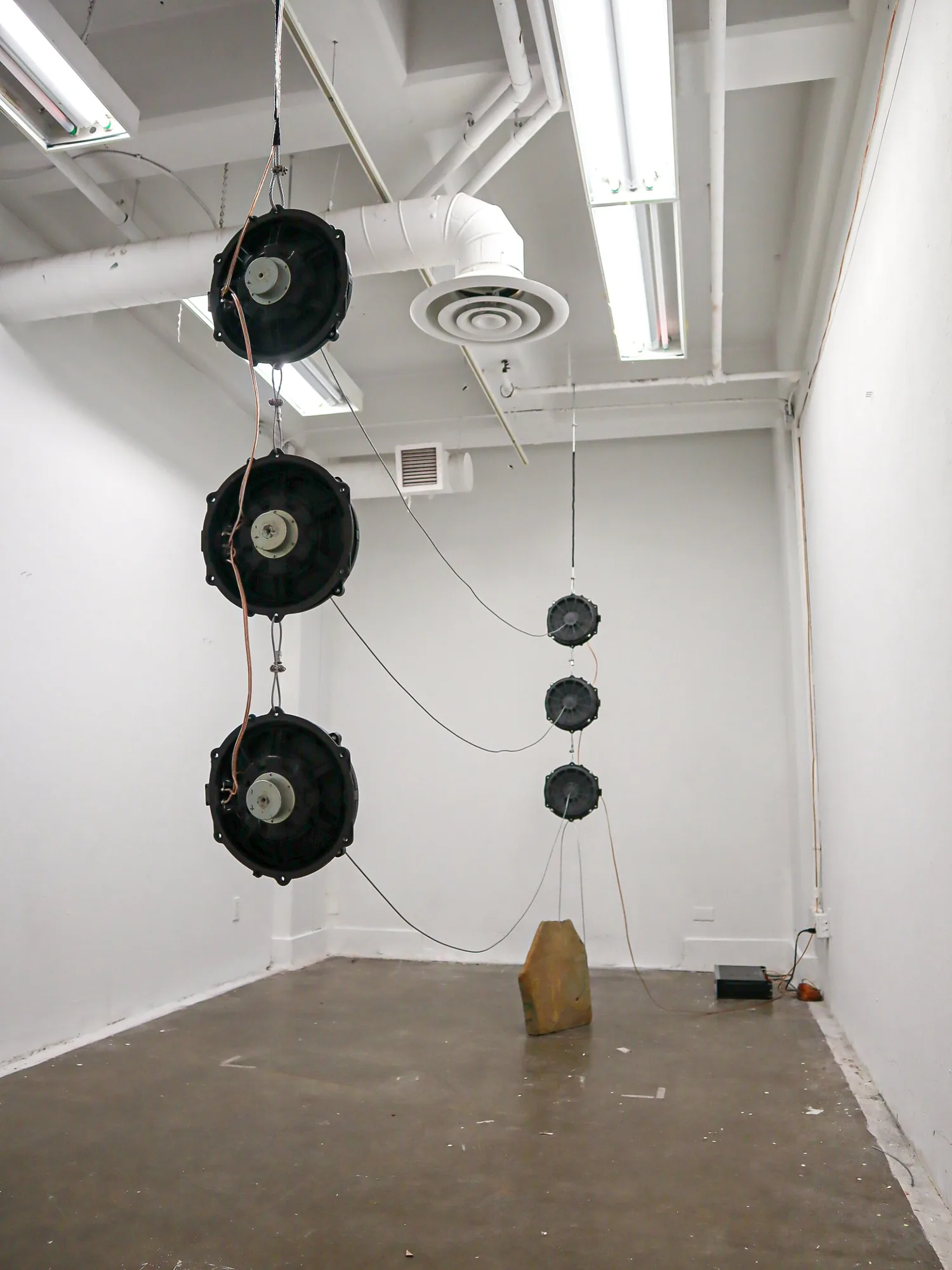
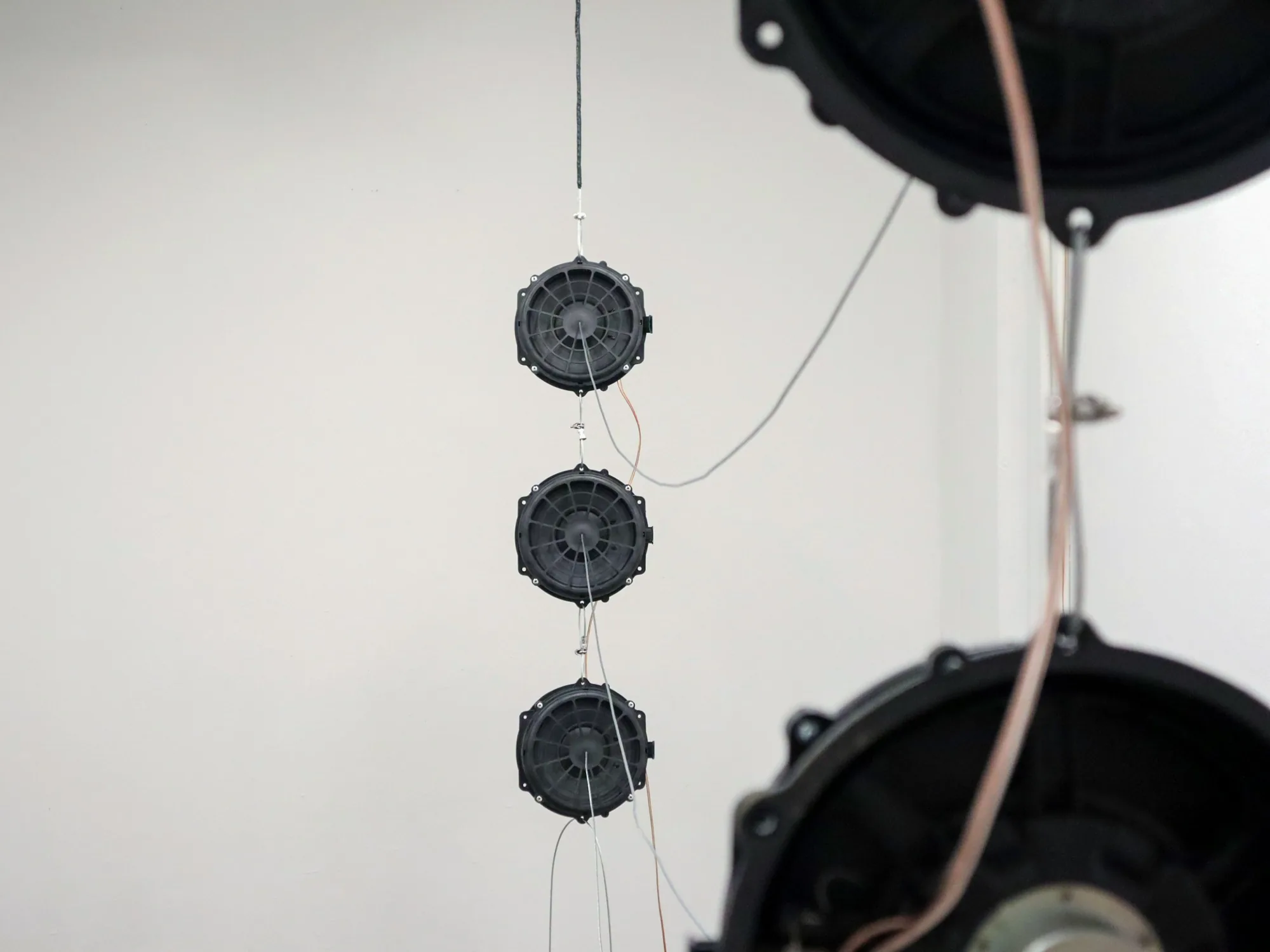
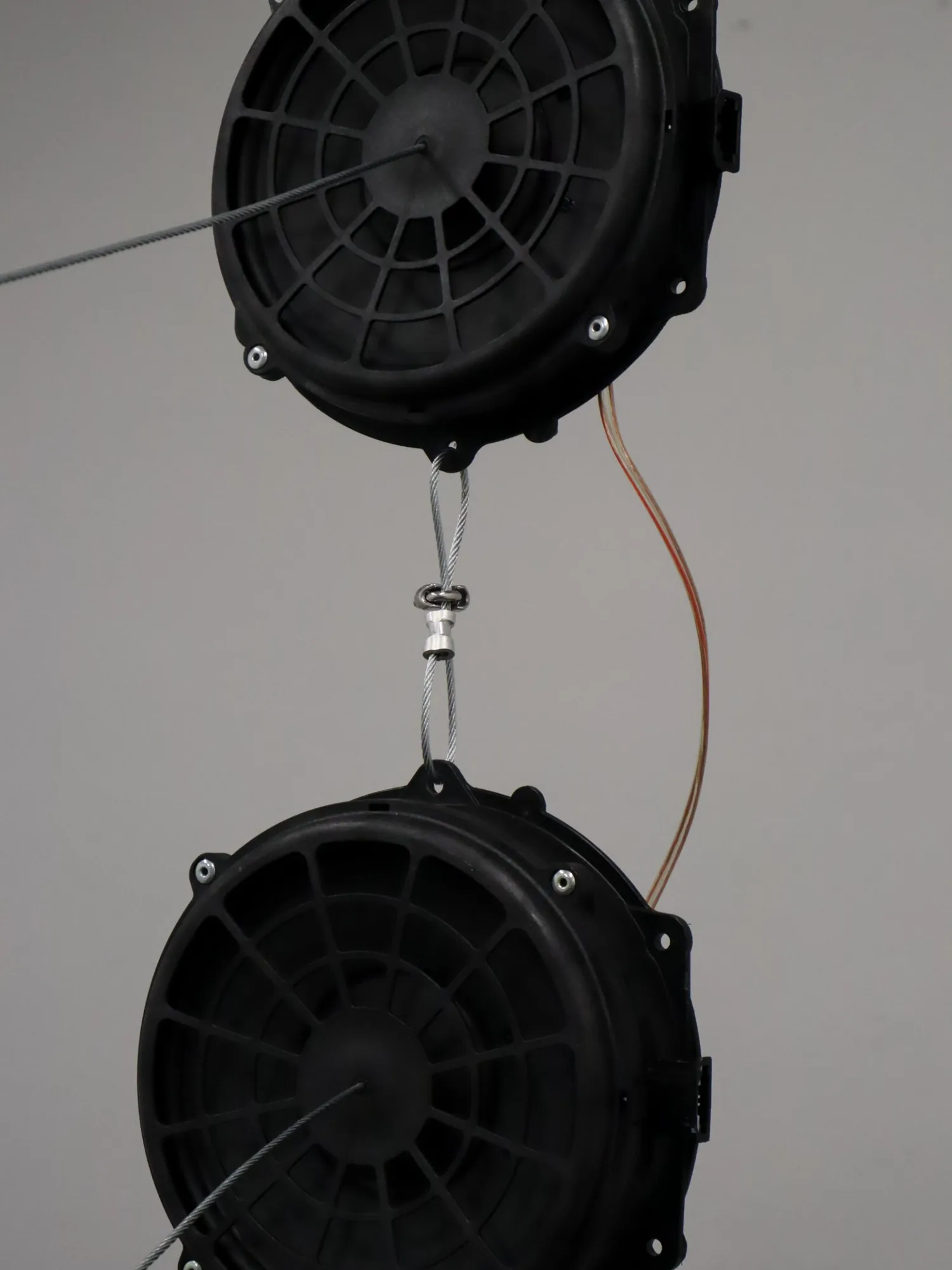
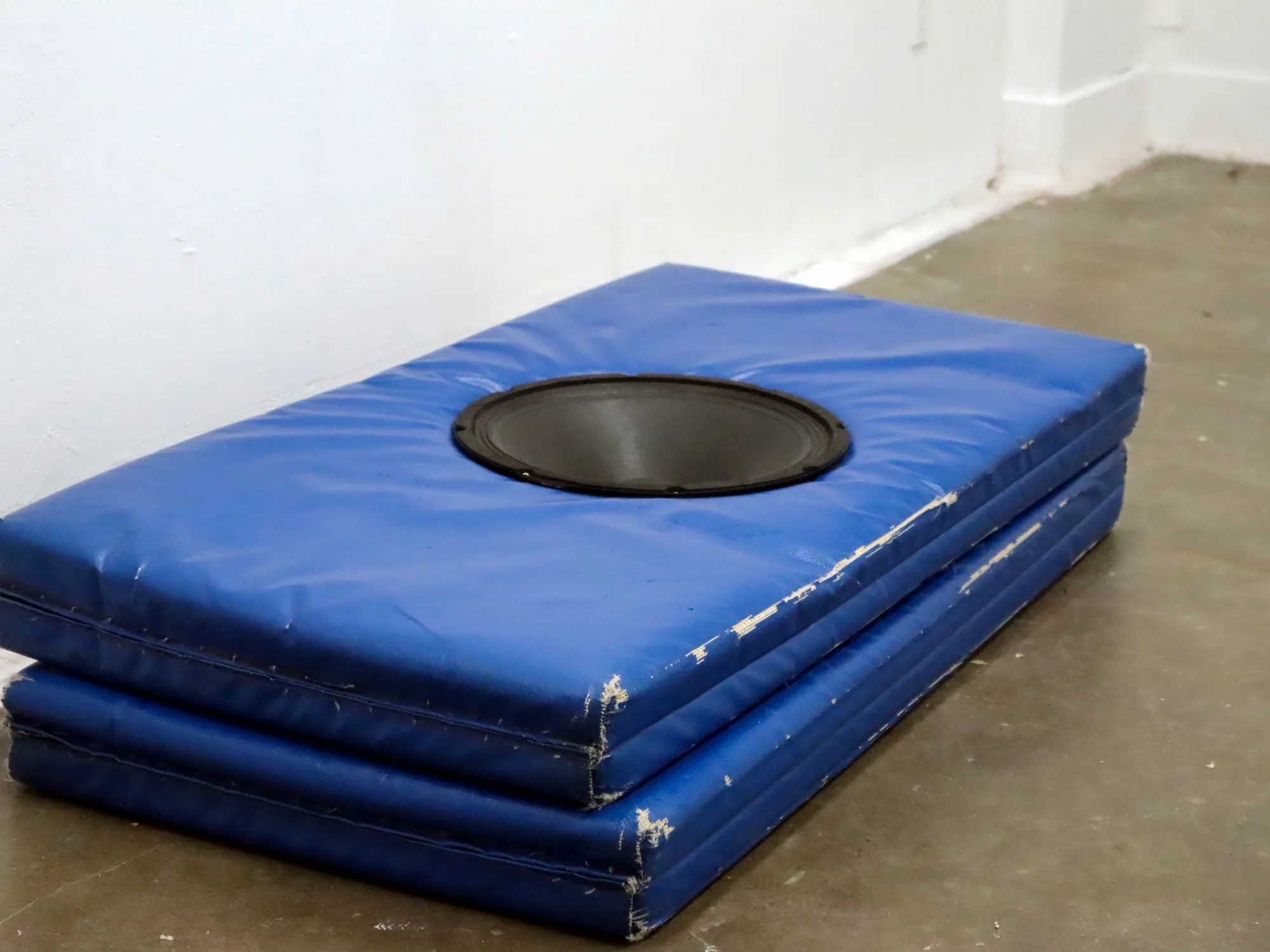
Masterpupil(s) orchestrates a sound-based installation that situates the condition of burnout alongside contrasting modes of exhaustion. Six car speakers extracted from a Porsche Macan are suspended in a self-facing configuration, linked by cables transmitting low-frequency vibrations between 20–40 Hz. Playing off a looping CD track, the speakers sustain continuous cone excursion, emulating the strain of a misfiring car in motion that never quite resolves.
For Korean-German theorist Byung-Chul Han, burnout manifests as an isolating, repetitive form of fatigue produced through excess performance and achievement-based imperatives. In contrast, Peter Handke articulates a form of tiredness that suspends the demand to act, enabling a relation to the world grounded in trust. Under these two modes, the complexity of responding to personal burnout leaves one without a clear stance; exhaustion becomes the medium through which everything is felt.
What once appeared as an exception begins to define the structure of the everyday. Burnout no longer interrupts experience, but becomes the condition through which it is organized. The question is no longer how to overcome burnout, but what it reveals about the terms under which contemporary life is sustained.
Audio engineer: Devin Defreyne.
Endless thanks to Devin Defreyne, Lisa Oiwa, Richard Phu, Timo Cheah, Jason Mendiola, Yan Wen Chang, Pavel Ioudine, Tzu-Jui Huang, Ham, Treshaun, Maddie Wilmink, Marton Robinson, soJin Chun, and Ivetta Sunyoung Kang.